Charleston, West Virginia: A Haven for Tree Enthusiasts
Charleston, West Virginia, is a paradise for tree lovers, proudly holding the title of the leafiest capital city in the United States. With an impressive 74.7% tree canopy cover, it surpasses cities such as Tallahassee, Florida (56.1%) and Little Rock, Arkansas (54%).
West Virginia is also among the most forested states in the nation, with more than 78% of its land covered by forest.
Below, you’ll find information about the Tree City USA program, must-visit spots for tree lovers in and around Charleston, and an exciting new initiative to enhance the city’s green landscape.
Tree City USA
In 1976, the Arbor Day Foundation established the Tree City USA program, an annual recognition initiative aimed at raising public awareness of trees in communities nationwide.
Cities with Tree City USA status gain access to specific federal funding sources.
To achieve Tree City USA designation, communities must apply annually and meet four criteria:
A tree board
A public tree ordinance
Annual expenditures of $2 per capita for community tree activities
An Arbor Day observance and proclamation
Charleston proudly earned its Tree City USA status in 2024.
State Capitol Complex
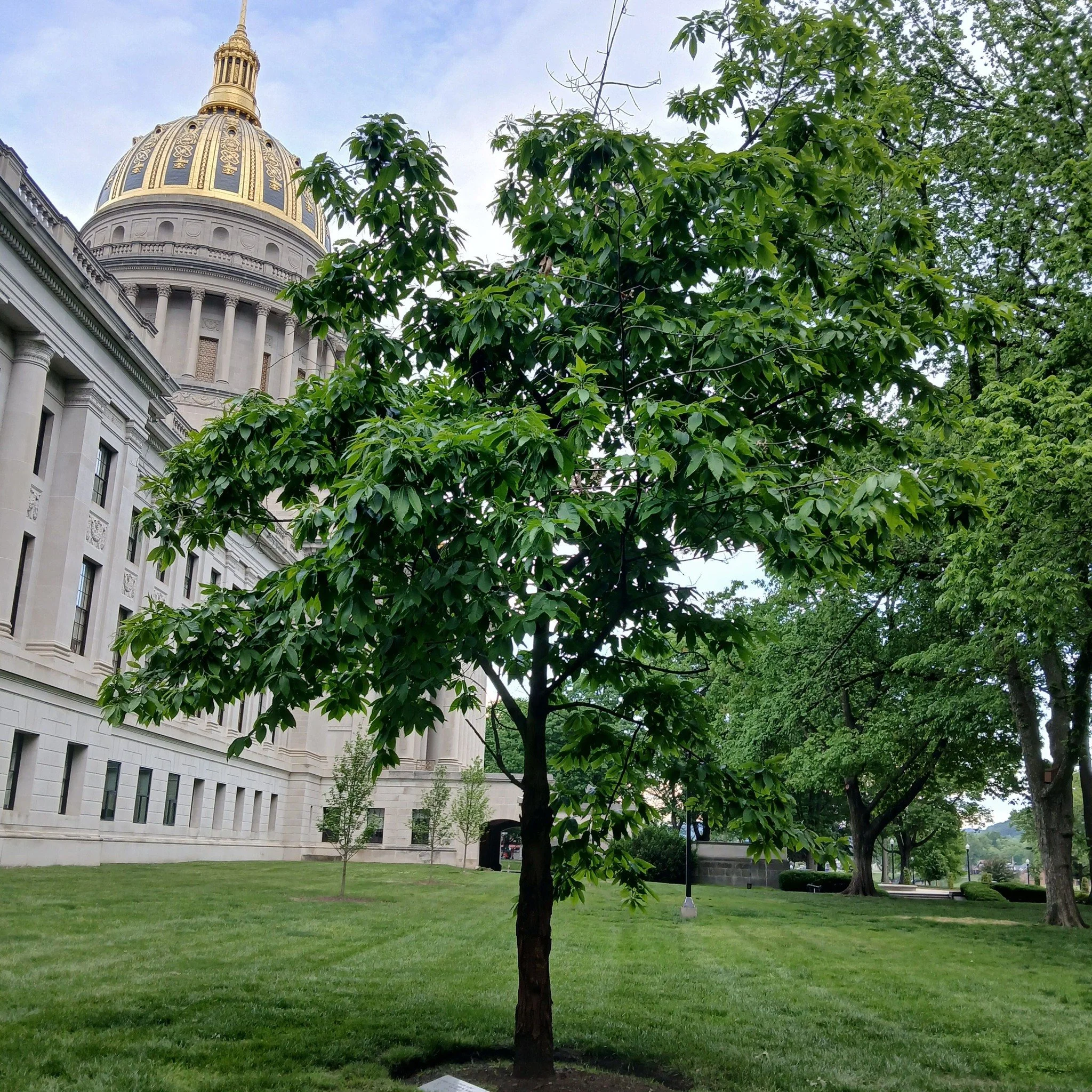
The grounds of the West Virginia State Capitol feature three fountains, statues, a veterans memorial, level walking paths, and seasonal displays of bulbs and summer annuals spread across 16 acres.
Visitors can enjoy a variety of flowering trees, including dogwoods, crab apples, and a majestic West Virginia State Champion American Elm.
The iconic 293-foot gold-domed Capitol Building, completed in 1932, is surrounded by the Governor’s Mansion, Holly Grove Mansion (built in 1815 by Daniel Ruffner), and the Culture Center, which houses the state museum, archives, and theater.
The Sunrise Carriage Trail
The Sunrise Carriage Trail is a shaded, forested gravel path that spans 1.4 miles out and back, with an elevation gain of 210 feet.
Developed by Governor McCorkle to serve his Sunrise Mansion at the upper trailhead, the trail is surrounded by 12 acres of mature specimen trees, native azaleas, and perennials.
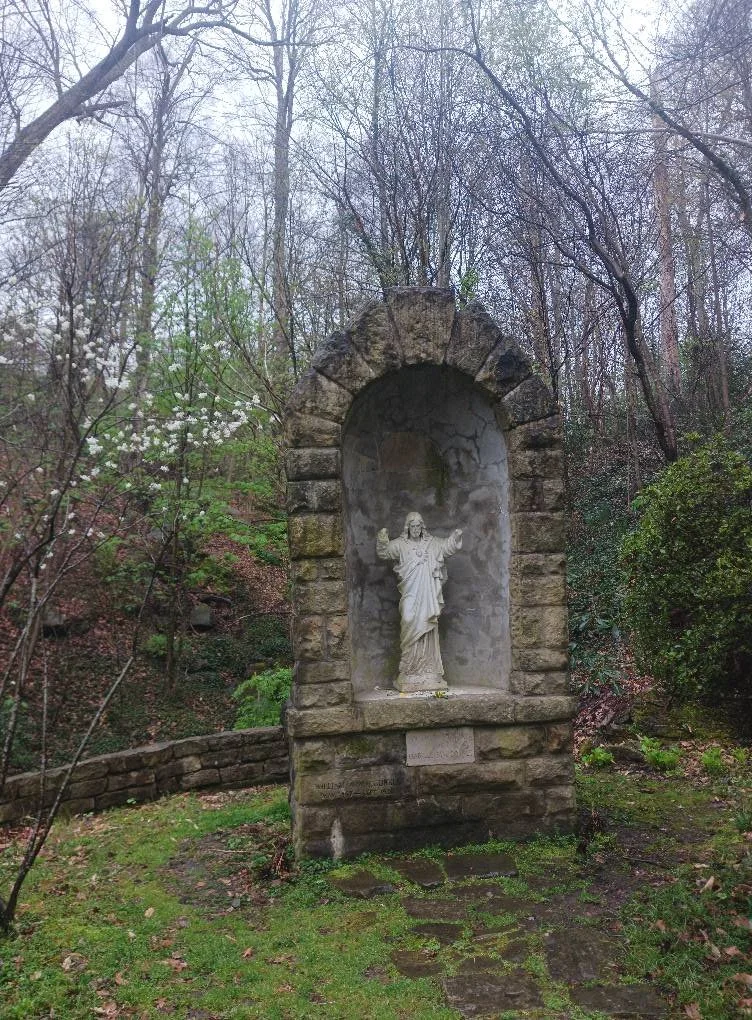
Along the path, visitors can find a shrine erected by Governor McCorkle in memory of his daughter, who tragically died in a car accident. His ashes were originally interred there but were later moved to Spring Hill when the property changed ownership.
Also look for a stone commemorating two Civil War women spies and a granite column honoring Carter Giltinan, founder of Friends of Spring Hill.
Kanawha Boulevard
Kanawha Boulevard offers a 7-mile paved path for walking and biking, nestled between the north bank of the Kanawha River and the boulevard.
Lined with trees, the path features historical markers that share the stories of Charleston and its residents, alongside many historic buildings and homes.

WVSU Arboretum
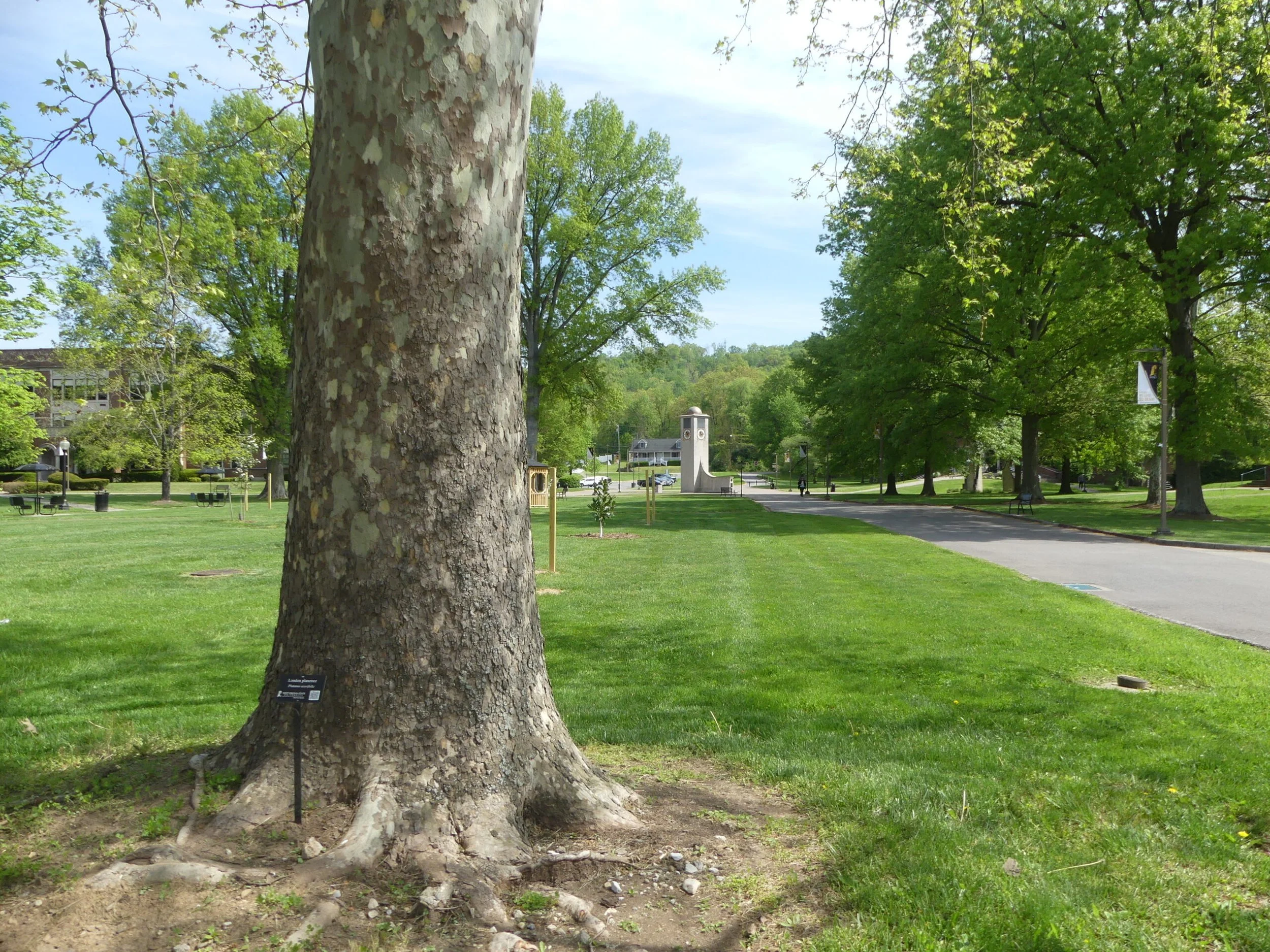
The WVSU Teaching Arboretum is a Level I ArbNet-accredited arboretum, managed in partnership with the WVSU Extension Service.
The campus showcases more than 650 trees, including 100 specimen trees marked with signage.
Visitors can use QR codes on the specimen tree signs to access an ArcGIS StoryMap virtual tour for additional information. This community-based arboretum encourages contributions from students, faculty, staff, and the public in planting and pruning trees on campus.
The WVSU Extension also offers educational workshops through the WV Tree Minders program, teaching the community how to care for trees. For more information or to schedule an arboretum tour, contact Liz Moss at 304.661.6016 or elizabeth.moss@wvstateu.edu. The campus is also home to the historic Cabell Cemetery.
Kanawha State Forest
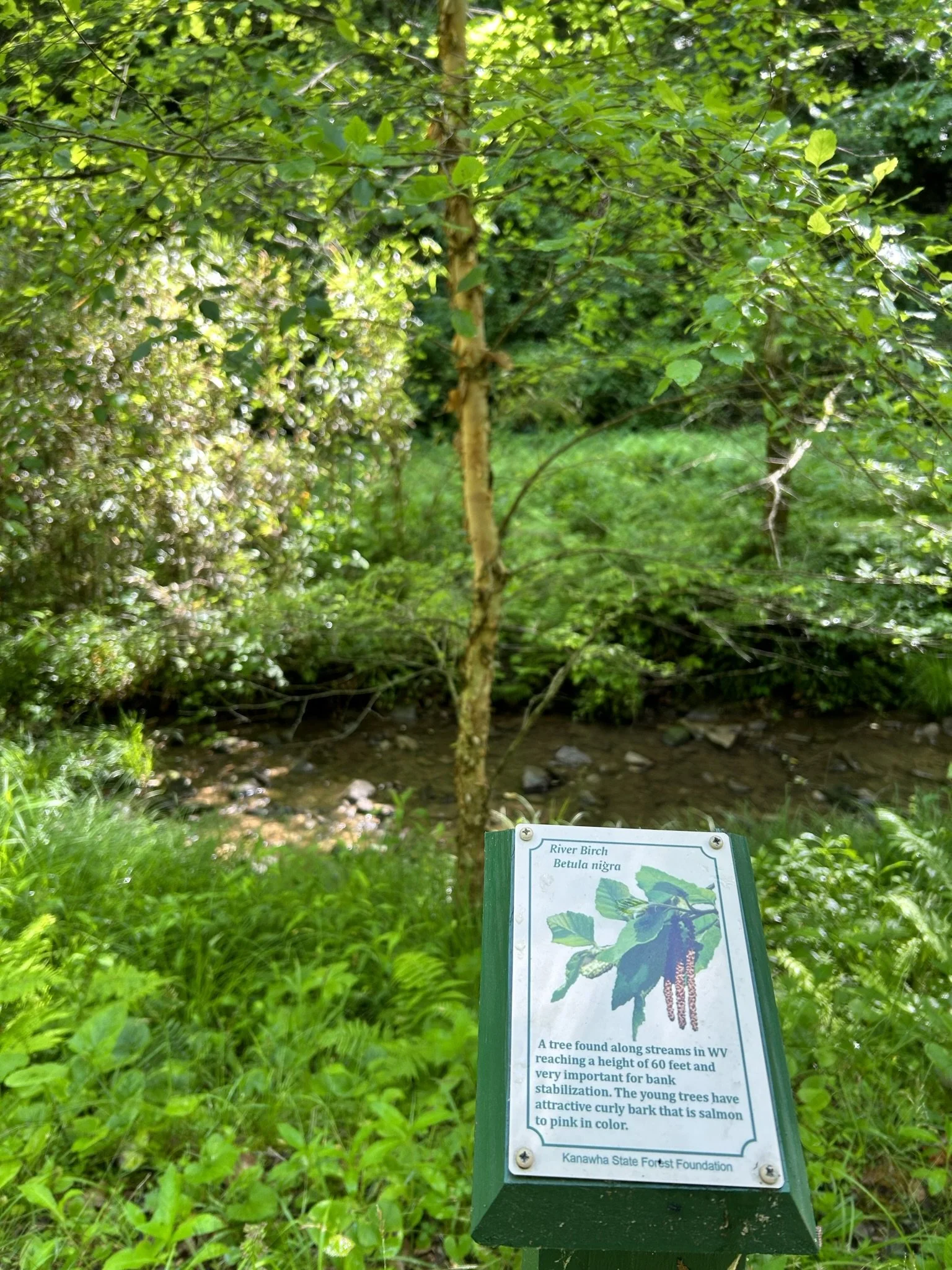
Located just seven miles from Charleston, Kanawha State Forest is a haven for outdoor enthusiasts. Covering 9,300 acres, this forest features over 60 miles of hiking and biking trails suitable for every season. For a one-time visit, check out the nature center, which offers exhibits on local wildlife, natural history, and cultural heritage. Behind the center, an arboretum boasts interpretive signs identifying 53 trees and shrubs native to West Virginia and the Kanawha Valley Region. A relatively flat 2-mile loop trail allows visitors to experience the serene beauty of the forest.
The Appalachian Spring Project
Nestled in the heart of Appalachia, Charleston, West Virginia, is undergoing a remarkable transformation—one thousand flowering trees at a time.
The Appalachian Spring Project, envisioned by the city’s Municipal Beautification Commission, aims to plant 1,000 predominantly spring flowering trees along the city's streets, riverbanks, and parks from 2025 to 2027. Despite its coal-industry history, Charleston is located in one of the most climate-resilient and biologically diverse regions worldwide. Inspired community leaders are implementing a strategic beautification plan that promotes environmental conservation, stimulates economic development, and fosters cultural healing by planting a variety of cherry and other flowering trees throughout this economically challenged community.
The project will emphasize tree species diversity, with a significant portion of the trees being native species that provide considerable ecological benefits.
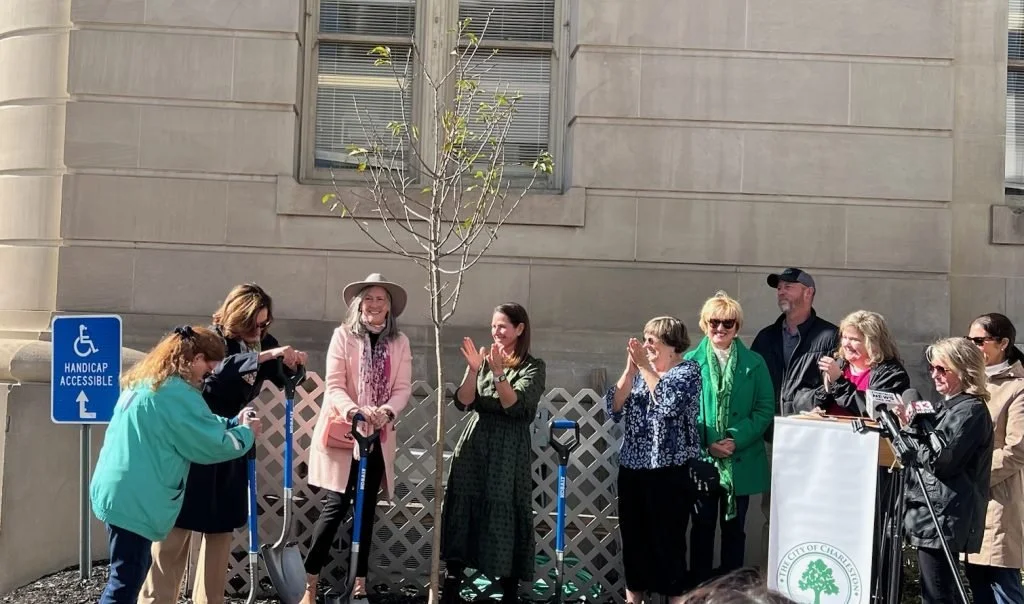
The initiative commenced in October 2025 with a ceremonial planting of 30 trees, the first two of which are now located in front of City Hall. In early 2026, 200 trees will be planted primarily along the Kanawha Boulevard riverbank. In the fall of 2026, approximately 300 trees will be planted in various areas of the city, with the remaining trees to be planted in 2027.